Up near the road
The widest horizon and the least shelter. Nothing interrupts the western sky, so the sun works on this glass right down to the water, and the wind arrives over the top with nothing to slow it.
A house near the top of the road and a house down among the boulders are both "in Llandudno", and they are not solving the same problem. This is a free, honest walk down the slope — what each band actually gets from the Atlantic, and what that means for the glass.
Written for this valley · about 11 minutes · nothing to sign up for
Short on time? Grab the PDF and come back to it — 15 pages.
Llandudno is a small, entirely residential granite bowl on the Atlantic side of the Peninsula, tucked below Little Lion's Head and reached off the coast road. There are no shops in it. There is no street lighting in it. And because the whole settlement is built up the sides of a steep amphitheatre facing open ocean, height above the beach changes almost everything about a window — more than which street it is on, and considerably more than what the house cost.
Three bands, and they behave differently.
The widest horizon and the least shelter. Nothing interrupts the western sky, so the sun works on this glass right down to the water, and the wind arrives over the top with nothing to slow it.
Stepped down among neighbours. Side views get clipped by rooflines, but the west stays open — and the granite outcrops start bouncing light back up into eaves and soffits.
Closest to the surf, and the harshest environment for anything mechanical. Maximum salt, maximum reflected glare, and spray carried onto the glass in a winter north-wester.
The properties highest up the valley have the view everyone comes for, and they pay for it in two currencies.
The first is duration. With no ridge, roofline or headland between the glass and the horizon, these houses hold the sun for the whole of its descent. In midsummer that descent takes hours, because the Cape sun does not drop out of the sky at this latitude, it slides sideways into the sea — and everything it passes on the way is west-facing glazing.
The second is exposure. A house on the upper slope catches wind that has crossed the ridge and spills down into the bowl, and it catches winter fronts head on. Whatever you hang outside up here has to be specified for that, not decorated for it.
Which is why, on band one, we lead with shading fitted outside the glass rather than inside it. The reason is physics rather than salesmanship. A blind on the room side of the window only meets sunlight after the pane has already let it in; the fabric warms up and hands that heat straight to the air around it. A slat or a screen carried outside the glazing intercepts the same energy in open air, where it convects away and never becomes your problem.
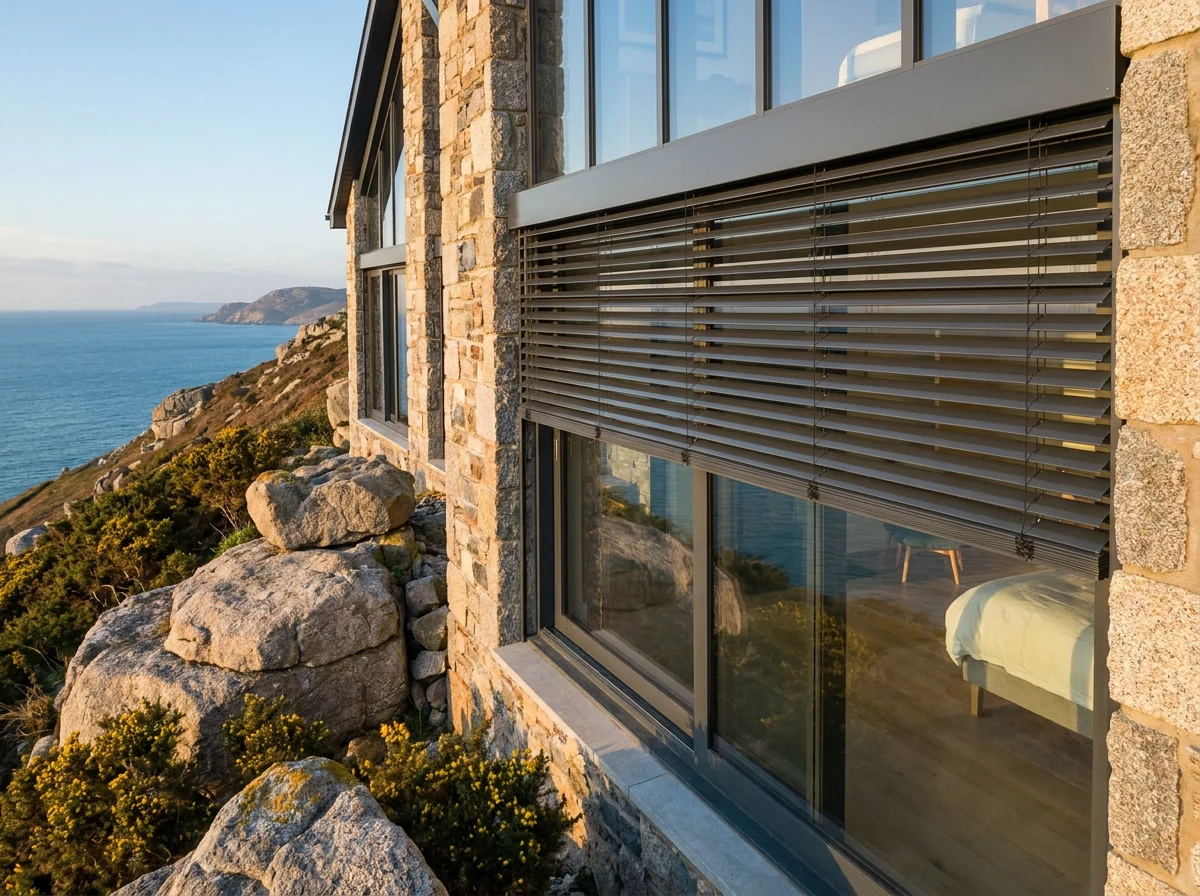
The mid-slope terraces are the most common Llandudno house, and the one people most often get wrong — because the problem here is not just the sun.
Below and around these properties sit large pale granite outcrops. Rock like that is a diffuse reflector: it takes the afternoon light and throws a soft, bright wash upward. Add the sea beyond it and a mid-band room can be receiving light from the sky, from the water and from the boulders at the same time, arriving at three different angles. That is why a blind that seems to fix the problem at three o'clock does nothing at six, and why owners here describe the room as "bright" rather than "sunny" — the two are not the same complaint.
The practical answer on band two is usually layered rather than heavy: a fine sunscreen weave that kills the wash without blacking out the view, plus something with a genuine tilt on the openings that face the worst of it. And on any pane where a screen alone is not enough, external shading remains the honest recommendation rather than a thicker curtain.
Stand in the middle of the room at five o'clock in February with your back to the window and look at the wall opposite. If the wall is glowing, the light reaching you is reflected, not direct — and the fix belongs at the whole opening, not just at the top of it.
Down among the boulders, everything gets more literal. Spray reaches the glass. Salt reaches the hardware. Sand finds the bottom rail. And in winter, a north-westerly front arriving straight off the Atlantic will put water on a west window with real force behind it.
Two things follow.
First, this is where interior fabric earns its keep again — not because it shades better, but because a room this close to the water often wants privacy and glare control more than it wants heat rejection, and because there is a limit to what should be hung outside a house that gets hit this hard. Where external shading is used down here, it must be able to retract itself and it must be built for the environment from the fixings up.
Second, maintenance stops being optional. Nothing marine-grade is maintenance-free; it is just slower to fail. A rinse with fresh water after a storm, and a wipe of guide channels once a season, does more for the life of an installation on this band than any amount of specification argument.
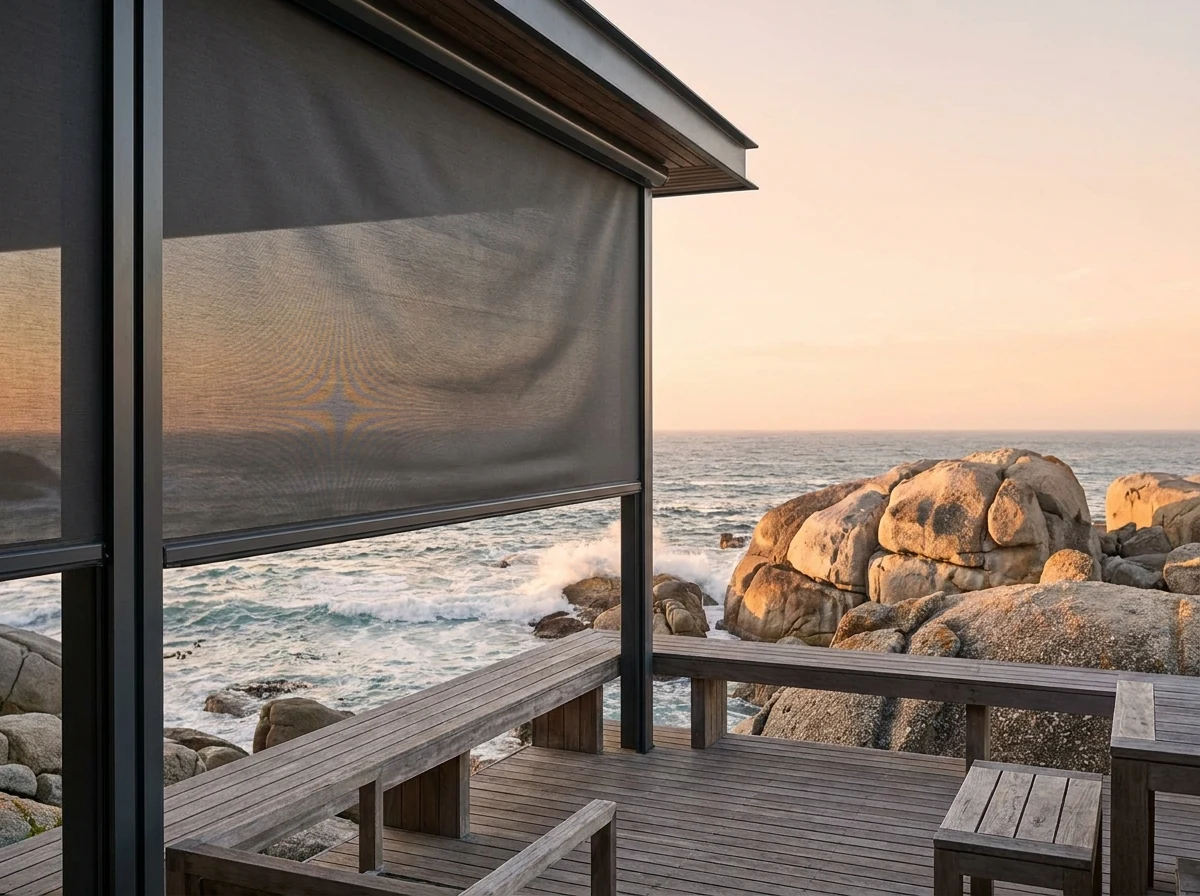
This is the single most useful thing in this guide, and it applies to all three bands.
Water is a mirror, but only at the right angle. When the sun is high, the sea absorbs most of what hits it and throws back very little. As the sun drops towards the horizon and the light strikes the surface at an increasingly glancing angle, the proportion the water reflects climbs steeply. By the last part of the afternoon a large share of the light coming through your window is not coming from the sun at all — it is coming off the sea.
Direct sun comes in over the top of the window. Reflected sun comes in under it.
That distinction matters because of how blinds are hung. A blind lowered from the head of the window blocks the sky first and the sea last. Half-drop it against the afternoon and you have cut exactly the half of the light that was bothering you least, while the bright path off the water carries on straight into your eyes at sitting height.
Three ways to deal with it, depending on the room:
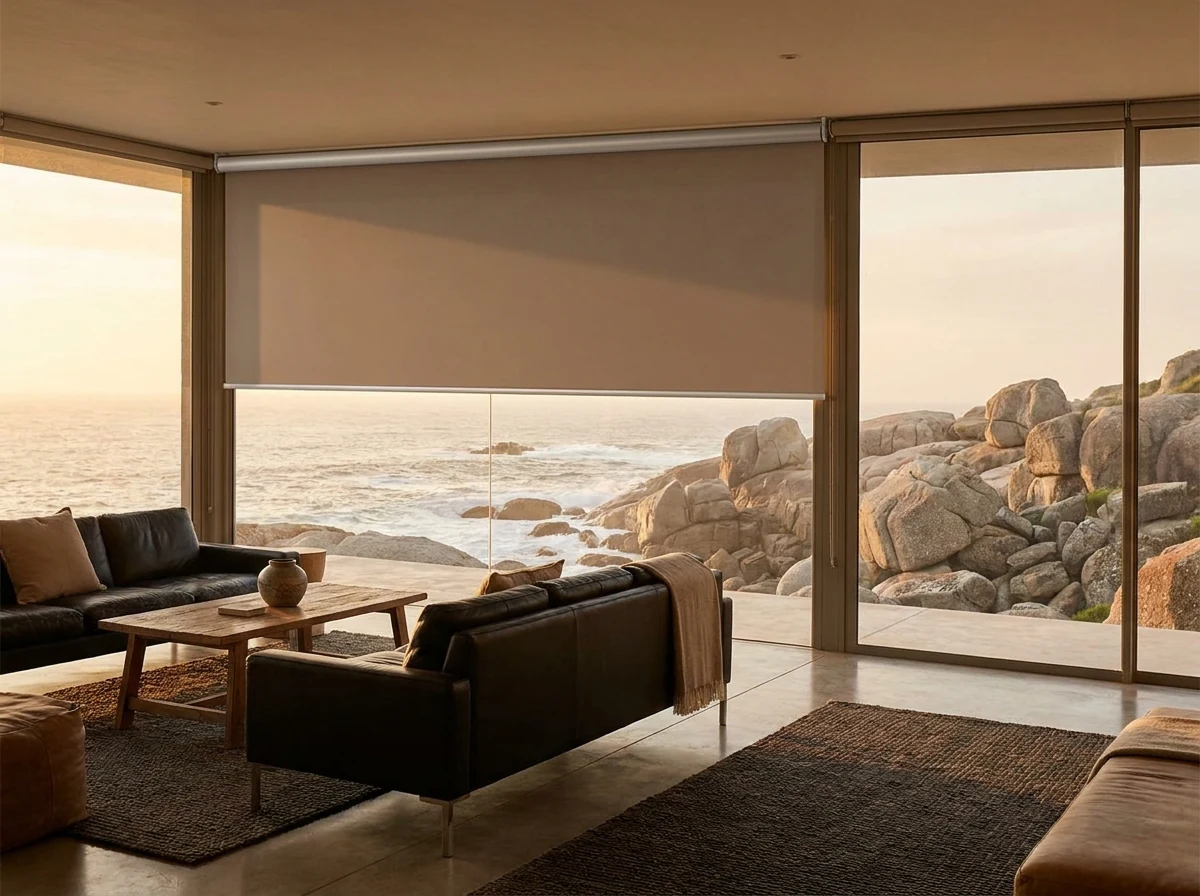
"Marine grade" gets used loosely. It is worth knowing which parts of an installation are genuinely at risk, because that is where the money should go.
Atmospheric corrosion is classified internationally under ISO 9223, which sorts environments into categories from very low right up to extreme — and a surf-front position sits at the severe end of that scale, with the airborne salt load falling off quickly as you move inland and uphill. In practice that means a band-three house and a band-one house are not in the same category, even though they share a postbox.
| Component | What goes wrong | What to ask for |
|---|---|---|
| Fixings and screws | The first thing to fail, and the one that brings the rest down with it. Ordinary stainless still pits in salt air. | 316-grade stainless rather than 304 anywhere within reach of spray. |
| Brackets and headboxes | Coating breaks down at cut edges and drilled holes, then the aluminium beneath blooms white. | Marine-specification powder coating, and touch-up on any hole drilled on site. |
| Guide channels | Sand and salt build up in the track until the blind binds or jams part-way. | Channels that can be flushed with fresh water, and a seasonal rinse. |
| Fabric | Salt crystallises in the weave; UV does the rest. Colour goes first, then the coating. | Solution-dyed acrylic or PVC-coated mesh outdoors; nothing natural-fibre facing the sea. |
| Motors and sensors | Water ingress at the head, usually where a cable enters. | An externally rated motor with a properly sealed entry, not an indoor unit in an outdoor position. |
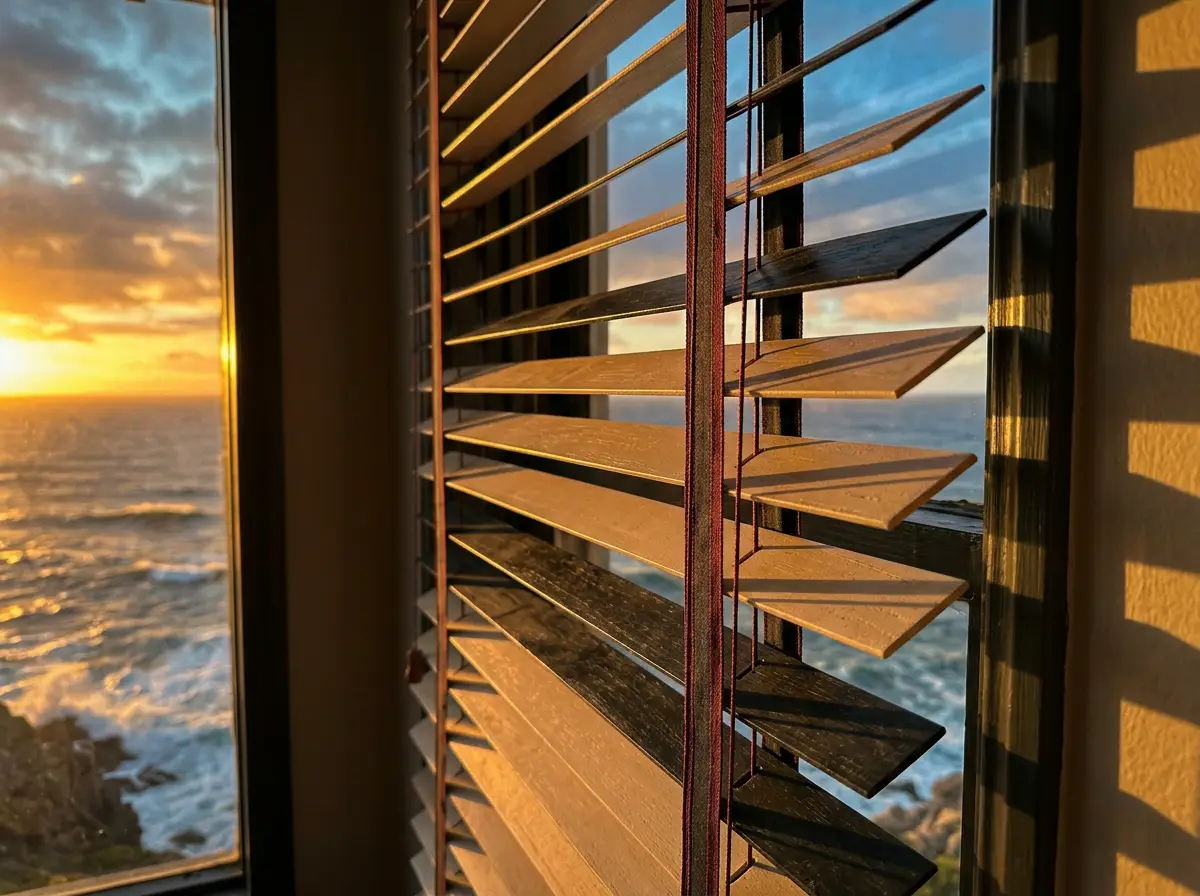
Llandudno gets hit from opposite directions at opposite times of year, and confusing the two leads to the wrong hardware.
From roughly October to March the south-easter runs across the Peninsula. In a bowl like this it arrives over the high ground and spills downward in gusts rather than a steady stream, which is harder on an awning than a constant blow — a folding arm can ride a steady wind and be torn by an unpredictable one. Anything retractable up here should have a wind sensor that pulls it in on its own, on the assumption that nobody is home.
Cape Town's rain arrives on cold fronts out of the north-west, off open ocean, and it hits the seaward face of the house with salt in it. This is a fabric and sealing question rather than a wind-rating one: it is why a west-facing external installation needs its coating intact and its channels drainable, and why the winter storm is what tests an installation rather than the summer gale.
Every outdoor shading product has a wind speed past which it must be retracted. Anyone who tells you otherwise is selling. The right question is not whether that limit exists — it is what happens automatically when it is reached.
One genuine luxury of this valley: with no street lighting, a Llandudno bedroom at midnight is properly dark on its own. Nothing has to be bought to achieve that.
Which changes what blockout is actually for. In a suburb with lamps outside the window, blockout fabric fights the street. Here it only ever has one job — stopping early sun, and specifically the summer sunrise that comes over the ridge behind the house and lights a bedroom well before most people want to be awake.
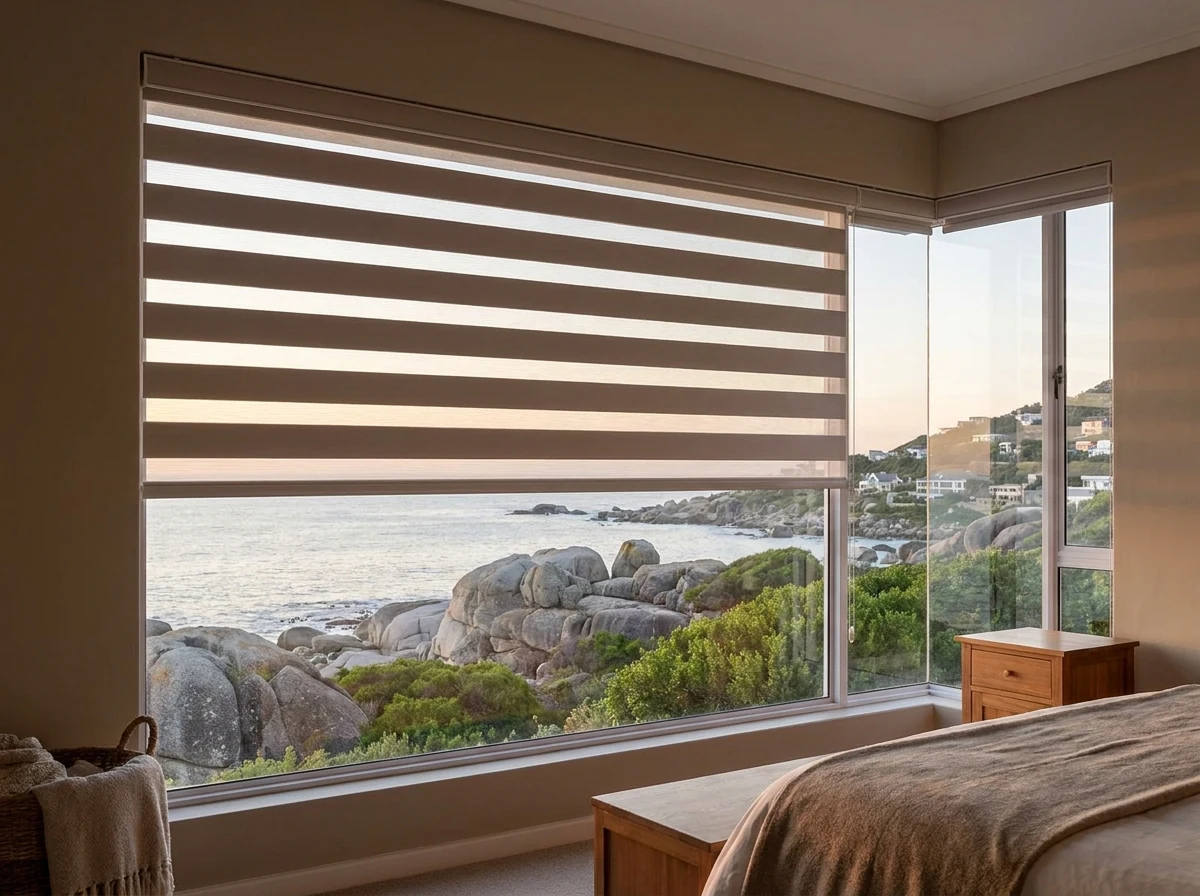
So the honest advice is to be selective. Full blockout where somebody sleeps late or works nights. Elsewhere, a banded or double system gets you a light-filtering layer for the day and a solid one for the morning on the same bracket, which is generally better value than blacking out a room you enjoy waking up in.
None of this needs a specialist, and all of it makes the visit quicker and the quote more accurate.
We measure every opening on site, bring physical samples rather than a screen, and put a written per-window price in front of you before anything is ordered. If the answer for a particular window is "you do not need us for that", we would rather say so at the measure.
Free in-home measure, samples in hand, and an itemised written quote per window afterwards. No obligation and no charge, whether you order or not.
Fill this in and one of our expert consultants will contact you shortly to arrange your free in-home measure.
Where this guide states a fact rather than an opinion, this is where it came from. Anything we could not verify, we left out rather than dress up.
The band descriptions, the recommendations and the opinions in this guide are our own, offered free and without obligation. Nothing here is a structural, engineering or planning opinion about any particular property.
Everything above, in one file: PDF, 1.1 MB.