Zip screens for a deck that catches the funnel
Vertical mesh or PVC screens locked into aluminium side channels on both edges — the outdoor room that stays put when the valley wind picks up.
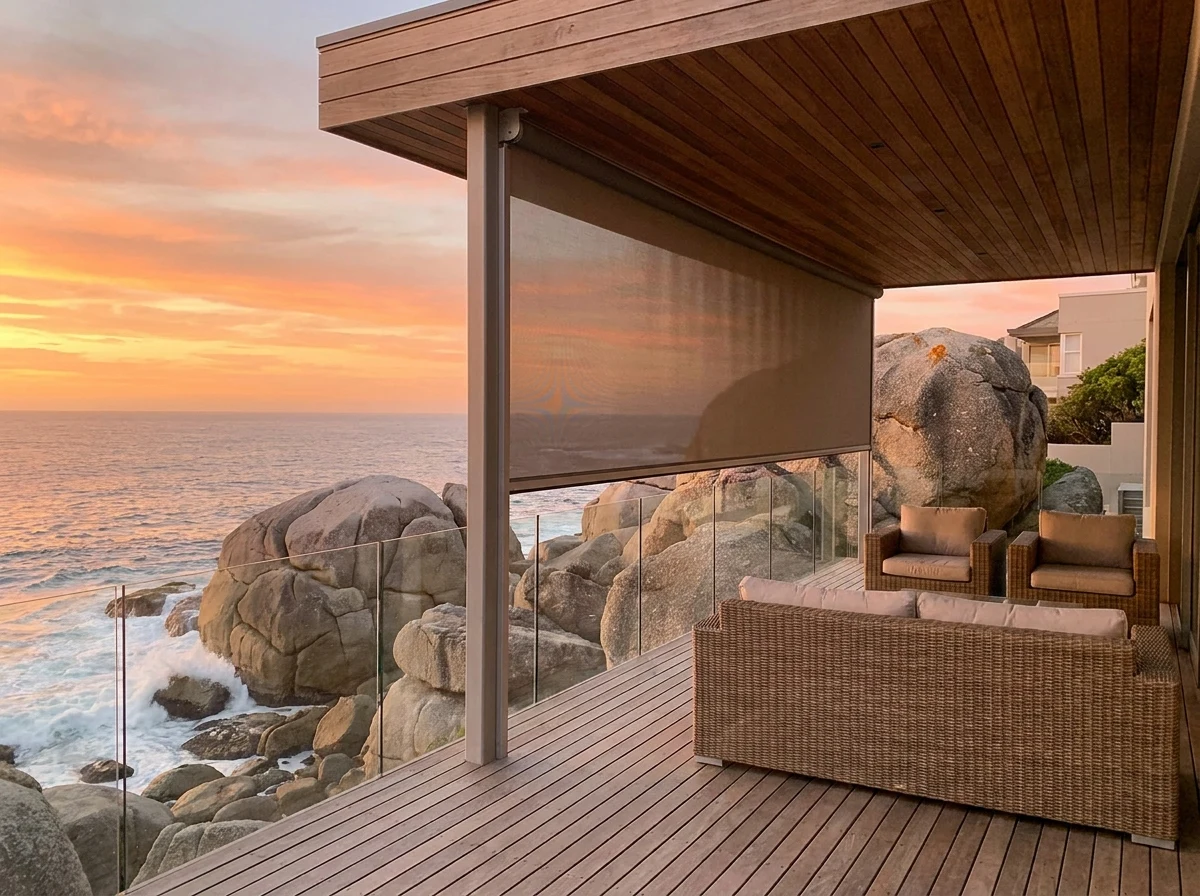
Vertical mesh or PVC screens locked into aluminium side channels on both edges — the outdoor room that stays put when the valley wind picks up.
An ordinary drop screen flaps and escapes its guides the moment the wind gets serious; a zip screen doesn’t. The fabric edge is welded into a zipper that runs captive inside aluminium side channels, so it holds real tension even when the valley funnel comes down hard off the ridge — the difference between an outdoor room that works every evening and one you stop using by spring.
Because Llandudno sits in a valley that funnels the summer south-easter straight down onto exposed decks, we treat a genuine wind rating as the baseline spec, not an option. Motorisation is standard on wide spans, and colour-matched channels keep the hardware discreet against the timber and stone finishes common on this hillside.
A zip screen is priced by the area it closes off. Installed, a crank-operated screen runs about R2,800 to R4,500 per square metre, and a motorised one R4,000 to R6,000 per square metre, including the control and a wind sensor where the exposure calls for one. Clear panels, wider spans and heavier channel sections all sit at the top of those bands.
On a terrace this exposed the sensor is part of the specification rather than an upgrade. Read these as planning bands, not a quote. Small openings carry a minimum charge, since the hardware and the fitting labour hardly change with the window. Each of yours is costed by itself at the measure and confirmed on paper.
Wind-rated screens matter most on the most exposed decks — the funnel toward Bantry Bay, the cliffside terraces of Clifton, and the sheltered-but-breezy patios of Camps Bay and Hout Bay alike.
Free in-home measure, a written per-window quote, and a wind rating that actually matches your exposure.